Every Picture Is a Compromise
Lessons from the Also-rans
Most photography websites show the photographer's very best work. Wonderful. But that's not the full story of a creative life. If we want to learn, we'd better pay attention to the images that aren't "greatest hits" and see what lessons they have to offer. Every picture is a compromise — the sum of its parts, optical, technical, visual, emotional, and even cosmic – well, maybe not cosmic, but sometimes spiritual. Success on all fronts is rare. It's ok to learn from those that are not our best.
This is a series about my also-rans, some of which I've been able to improve at bit (i.e., "best effort"), none of which I would consider my best. With each there are lessons worth sharing, so I will.
Previous image | Next image |
Original digital capture
Camera Vision vs Human Vision
Budding fine art photographers are often surprised by the knowledge that cameras don't see the way we humans see. The second phase in becoming a fine art photographer is to learn how to make the picture accurately capture what we think we see. Maturity in fine art photography arrives when the picture expresses in two-dimensions and tones what we feel.
What I saw that I liked:
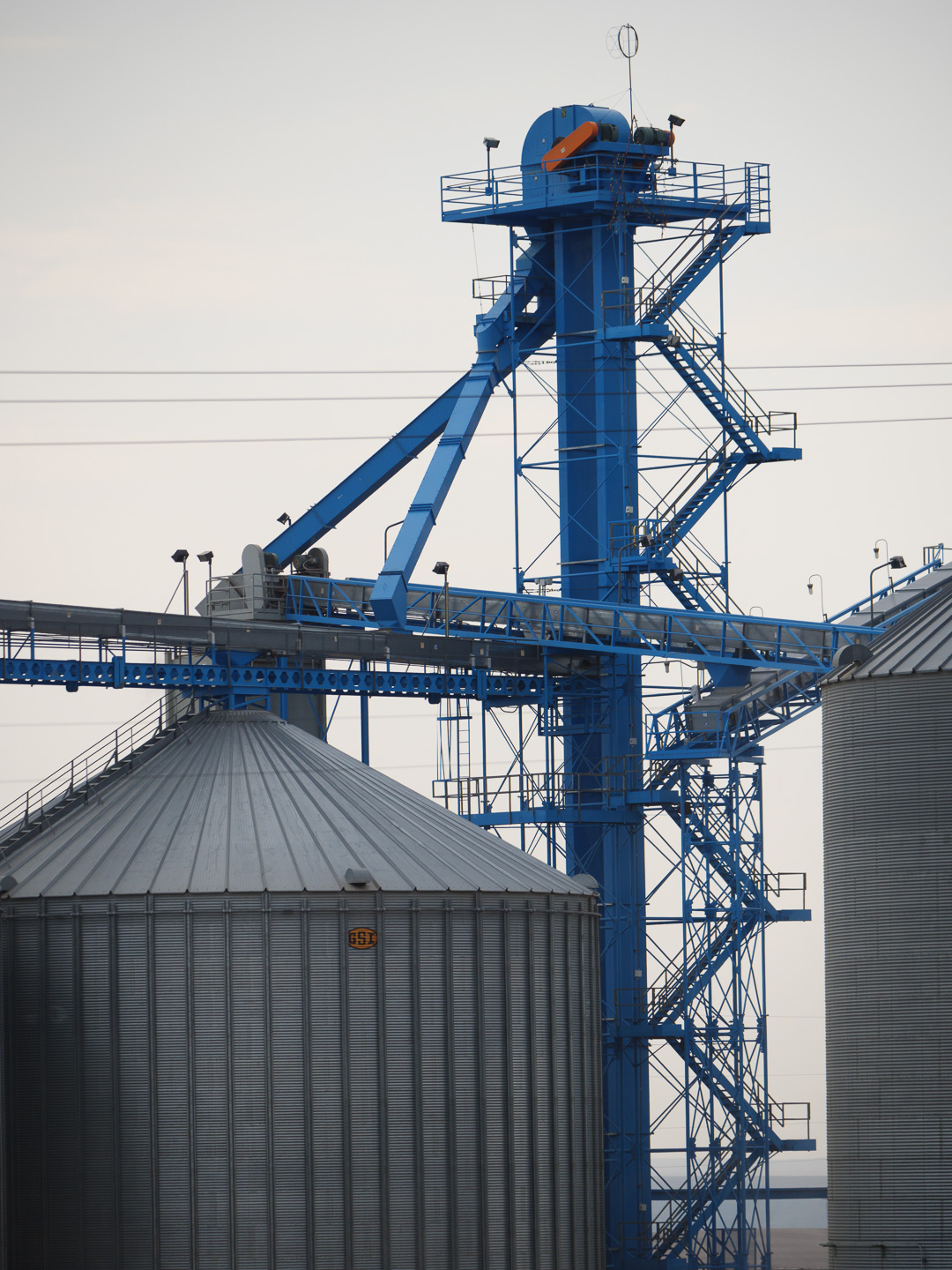
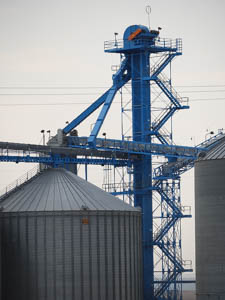
Another of the grain silos from Carter, Montana.
What I don't like in the picture:
This has the same blue cast I was discussing a couple of days ago which, I suspect, could be resolved with a shift in color balance. But what about that dash of orange at the top?
What I learned:
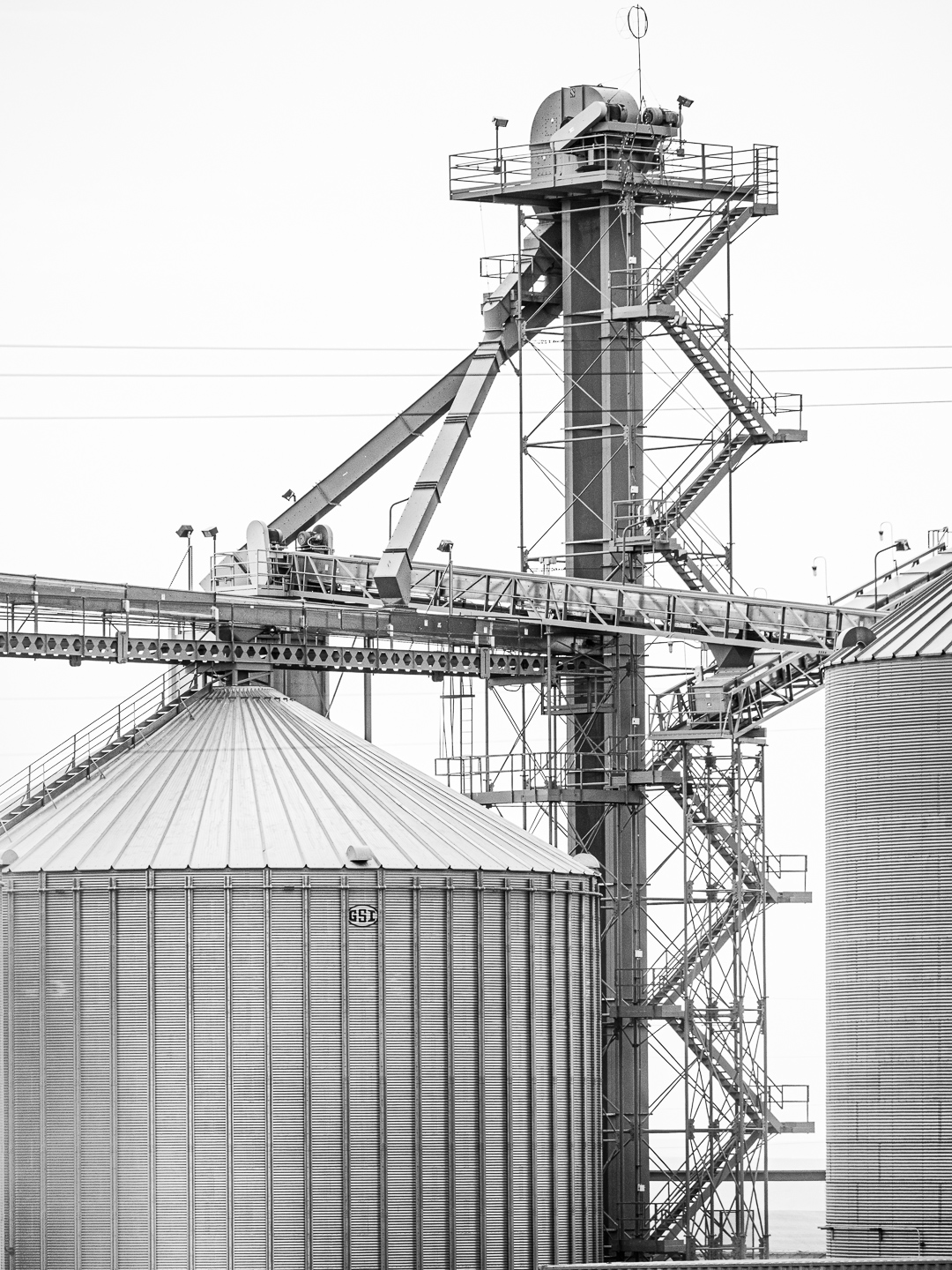
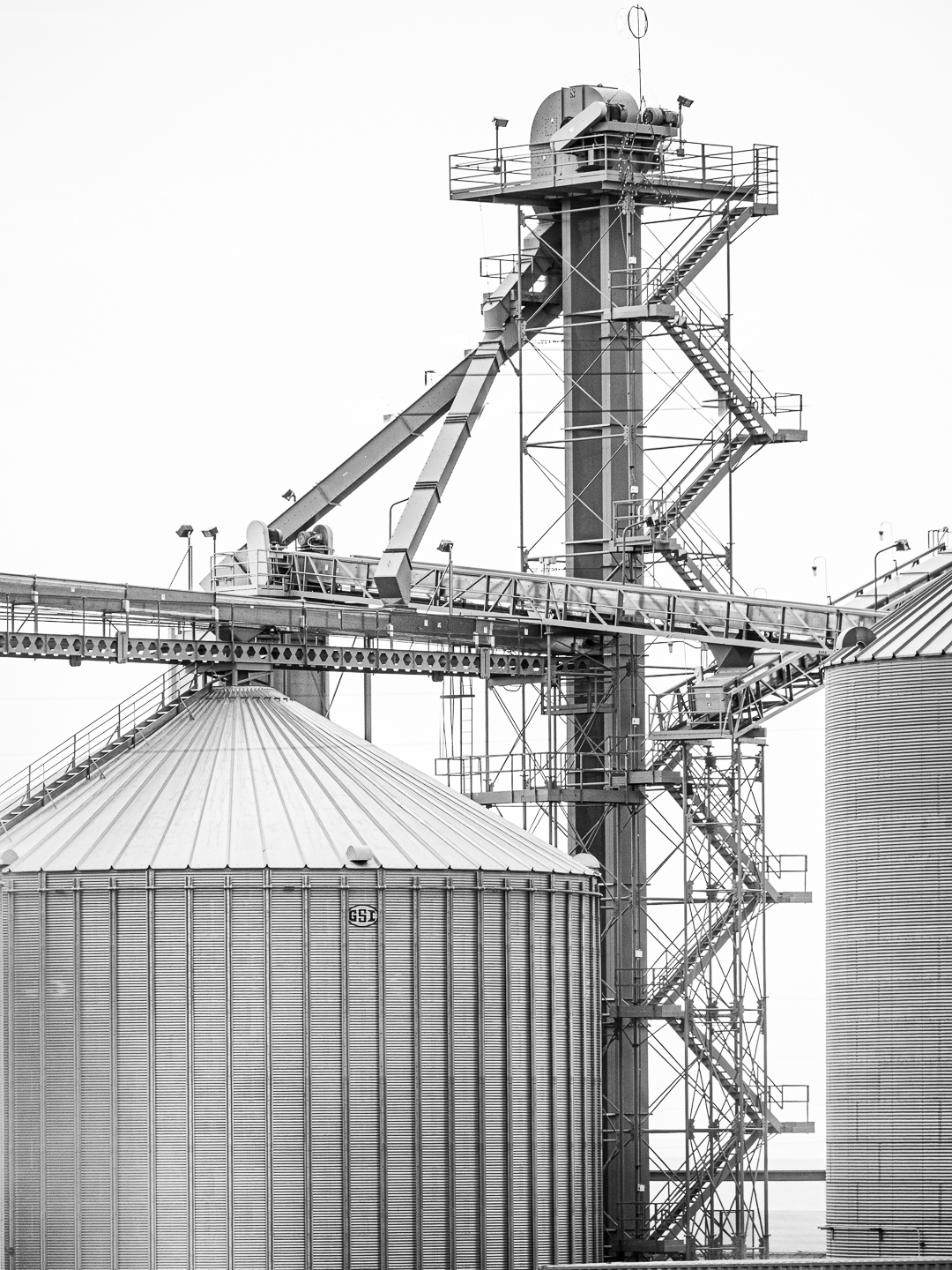
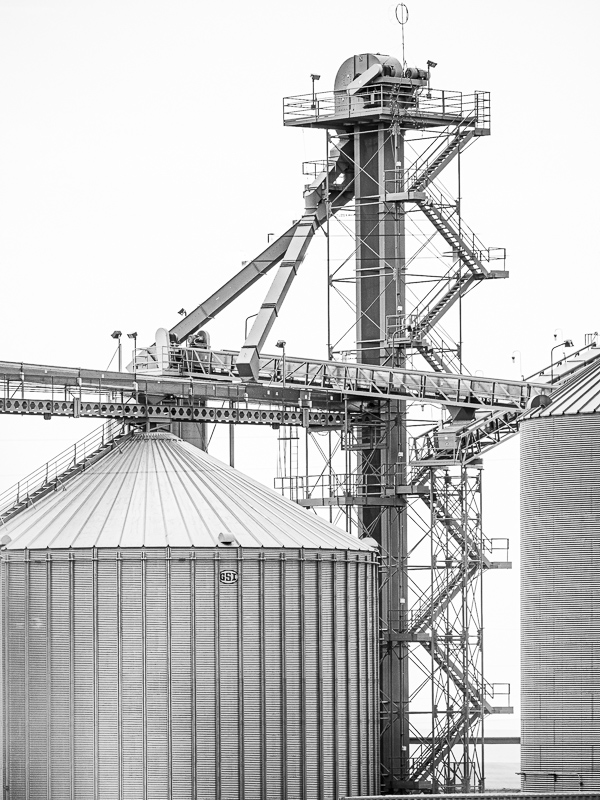
Obvious as it may seem, converting to b/w resolves all color conflicts. That splash of orange disappears as well as the blue cast in the metal and the blue paint on the central tower.
2nd Chances: What I might try next
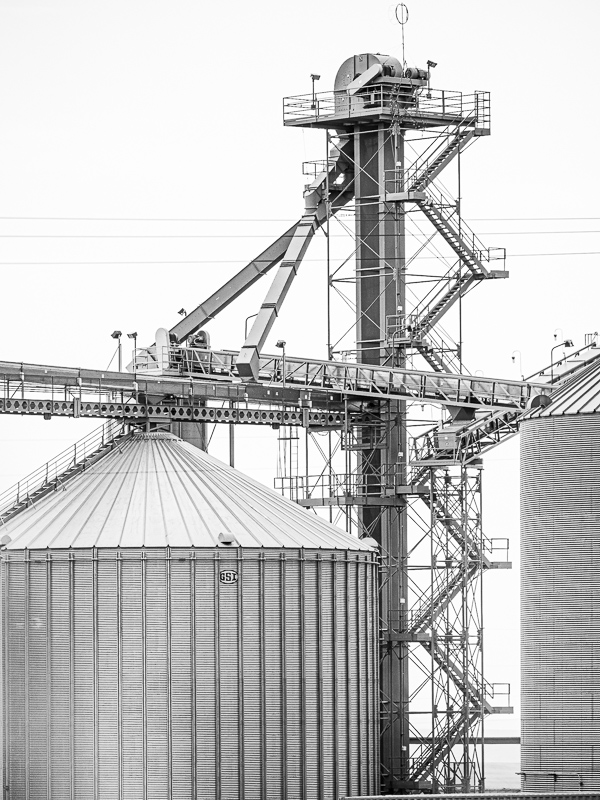
I suppose it is strictly a human preference, but I don't like telephone and power lines in my pictures. Silly, I know, but damn it, it's my picture and my choice, isn't it? Mind boggling how good Photoshop's removal of power line distractions is with one click. |
|