Every Picture Is a Compromise
Lessons from the Also-rans
Most photography websites show the photographer's very best work. Wonderful. But that's not the full story of a creative life. If we want to learn, we'd better pay attention to the images that aren't "greatest hits" and see what lessons they have to offer. Every picture is a compromise — the sum of its parts, optical, technical, visual, emotional, and even cosmic – well, maybe not cosmic, but sometimes spiritual. Success on all fronts is rare. It's ok to learn from those that are not our best.
This is a series about my also-rans, some of which I've been able to improve at bit (i.e., "best effort"), none of which I would consider my best. With each there are lessons worth sharing, so I will.
Previous image | Next image |
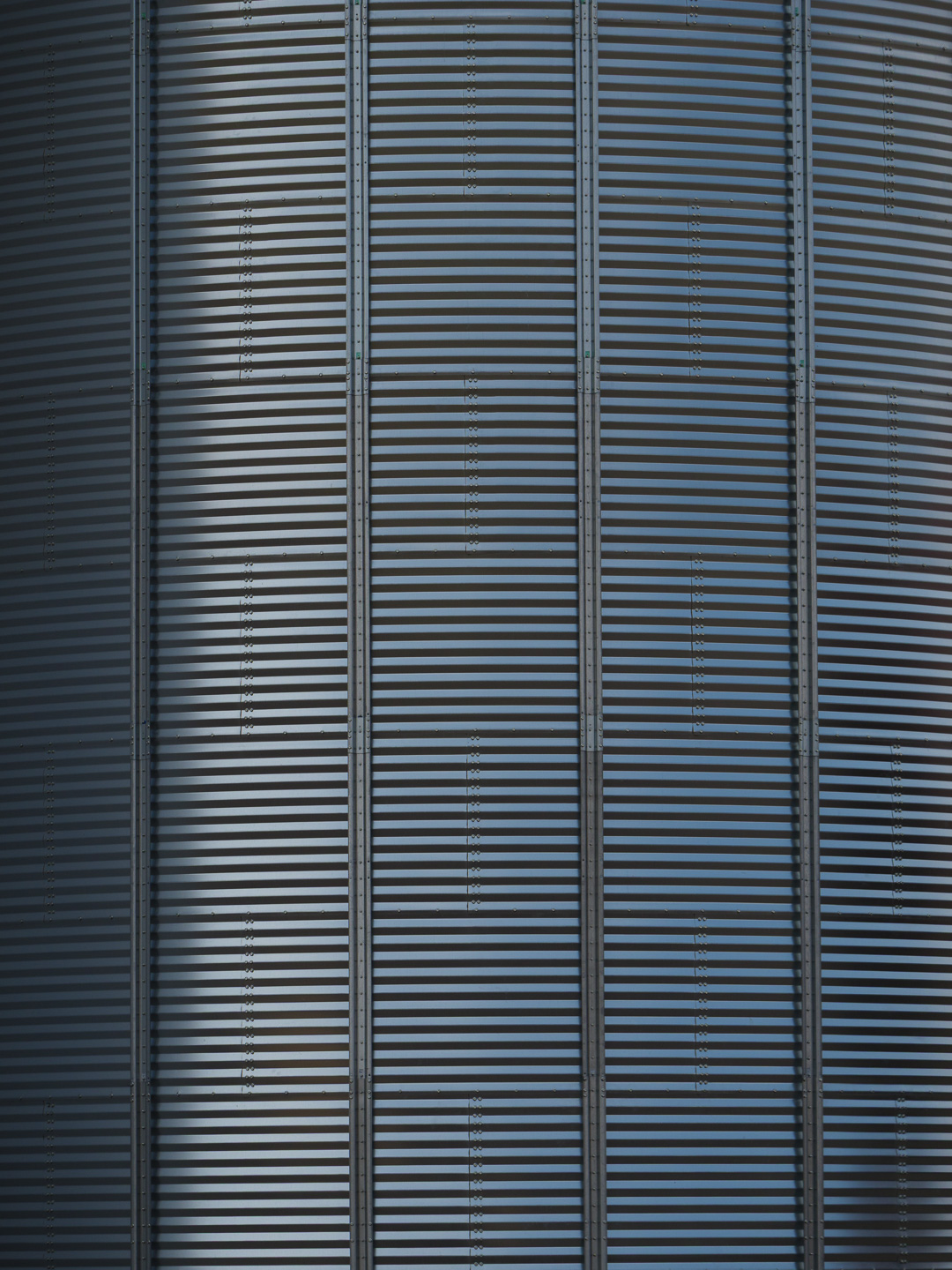
Original digital capture
Camera Vision vs Human Vision
Budding fine art photographers are often surprised by the knowledge that cameras don't see the way we humans see. The second phase in becoming a fine art photographer is to learn how to make the picture accurately capture what we think we see. Maturity in fine art photography arrives when the picture expresses in two-dimensions and tones what we feel.
What I saw that I liked:
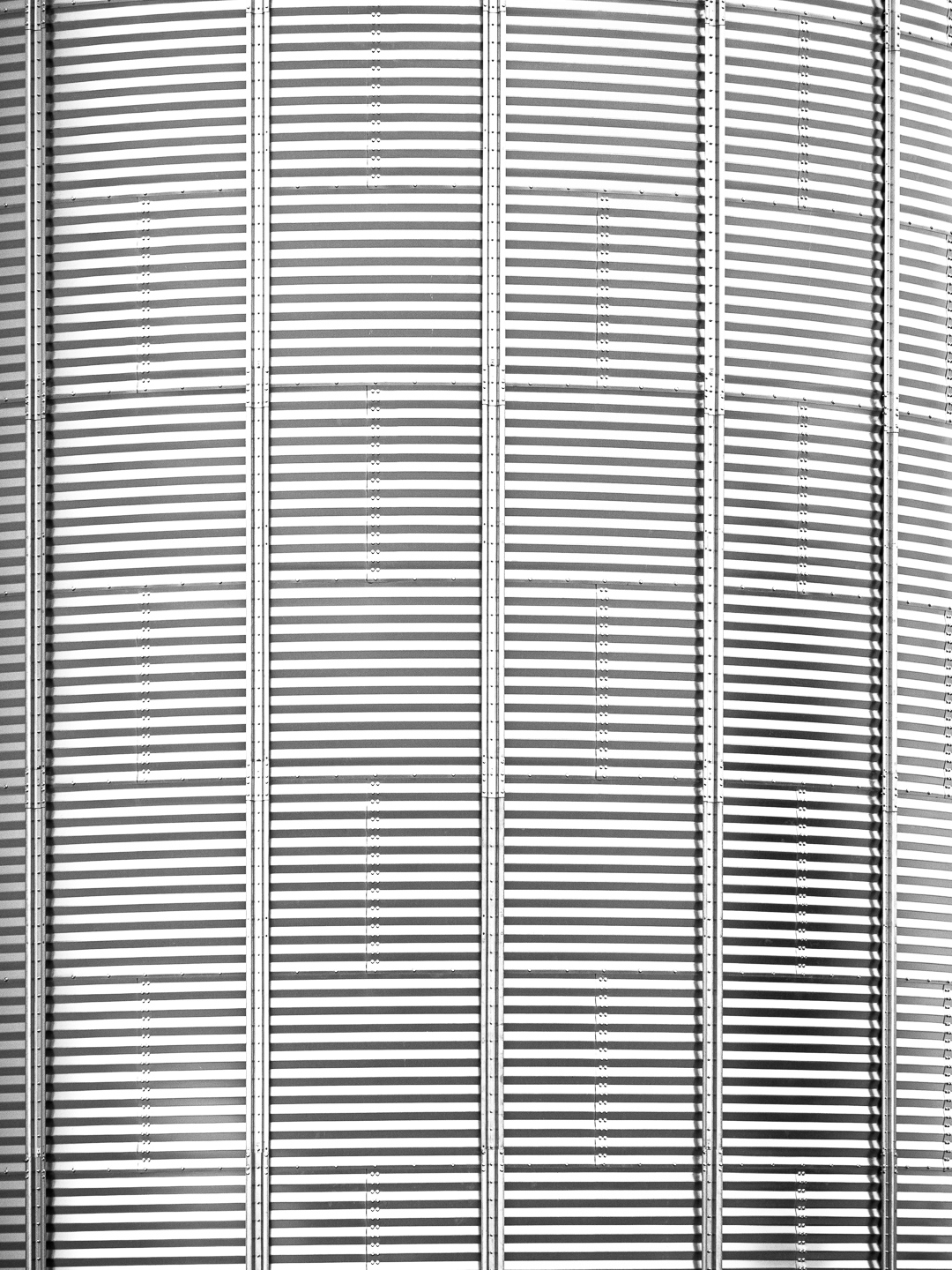
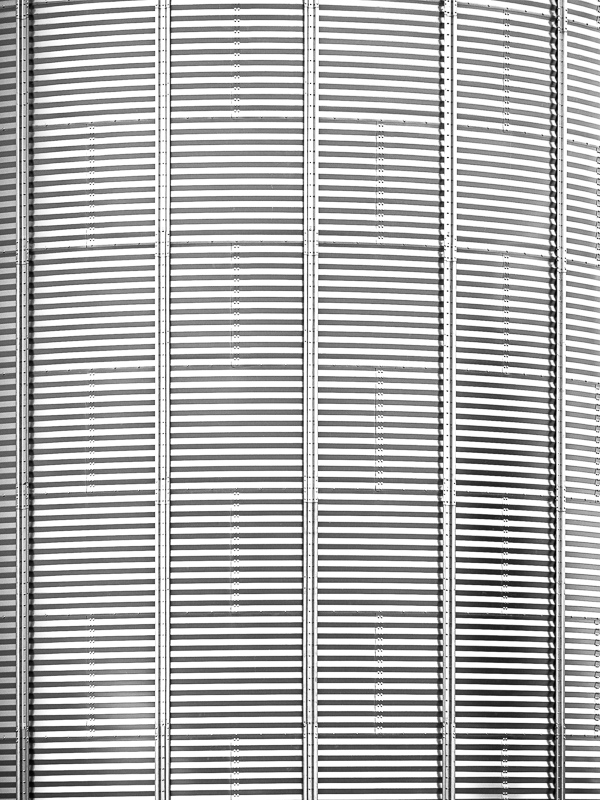
These metal structures for the storage of grain are fascinating examples of industrial design.
What I don't like in the picture:
Because they are metallic, they reflect the color of the sky, in this case blue. My eye didn't see them as blue.
What I learned:
I often find that framing and composition are best considered completely independently from tones and color. I can always adjust tones and color in processing. In this case, I knew before I clicked the shutter that the camera would capture blue I would need to eliminate in processing in order to emphasize the lines and form of this structure. |
|